Android is the most common way to put digital signage on hardware you already own. TV sticks, set-top boxes, tablets, and a whole category of commercial media players all run it, and if a device runs Android, there is a good chance it can run your screens.
This page covers how Android digital signage works, which classes of Android devices are worth using, the specs that separate a reliable signage device from a frustrating one, and the honest answer to when an Android box is the right choice versus a purpose-built device.
How digital signage works on Android
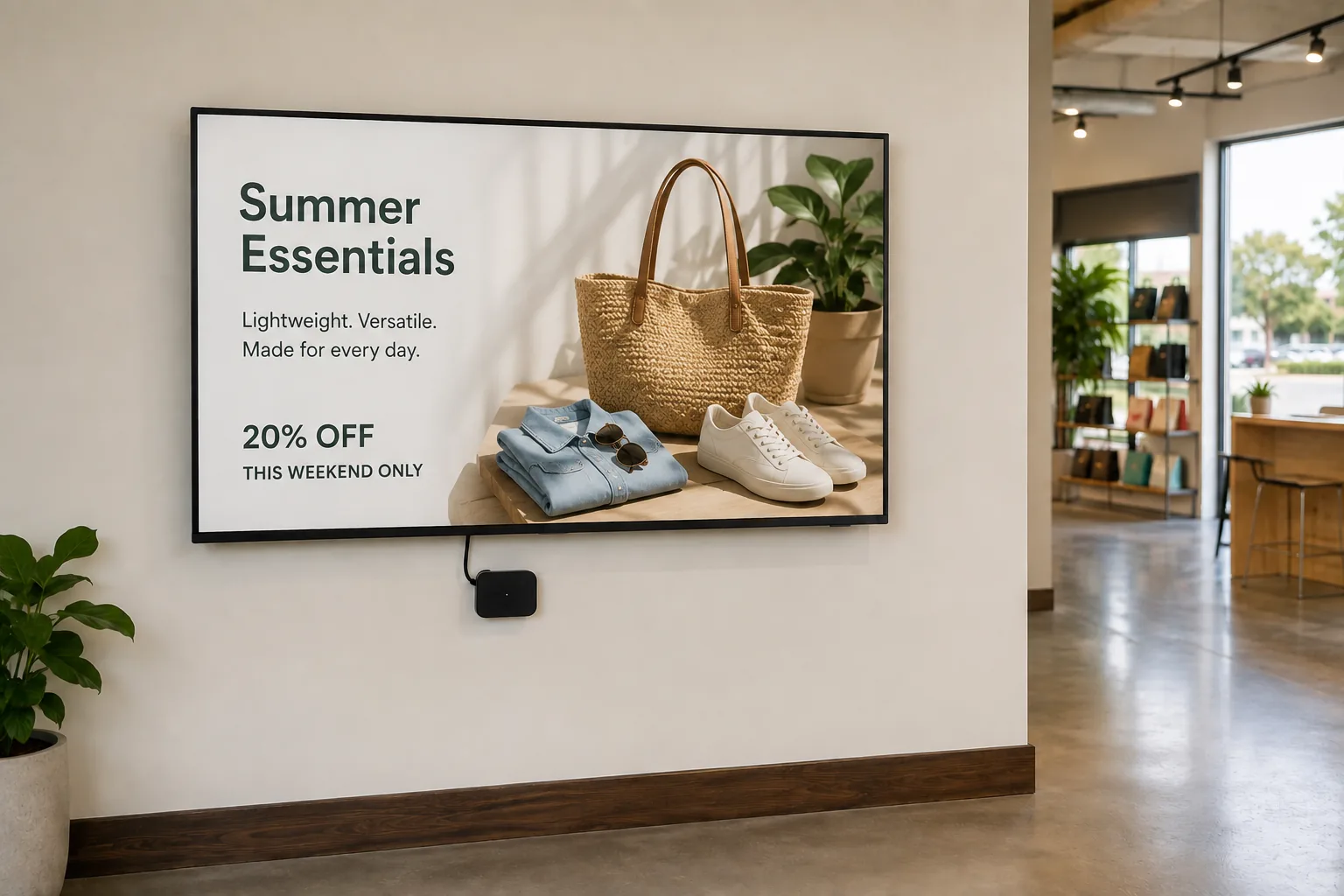
The model is the same as any modern signage setup: a cloud dashboard manages your content, and a player app on the Android device downloads, caches, and plays it. The Android device connects to a screen over HDMI (or is the screen, in the case of tablets and Android-powered displays), and everything is managed remotely.
Screenly Anywhere is Screenly’s software player for exactly this. It runs on Android and Android TV devices, the Amazon Signage Stick, ChromeOS, and Samsung Tizen TVs, and connects them to the same Screenly dashboard that manages dedicated players. Content is cached on the device, so playback continues through internet outages, and every screen reports its status back to the dashboard.
The practical upshot: an Android device you already have can be showing managed signage content in minutes, with no new hardware purchase.
Android device options for signage
Not all Android hardware is equally suited to running a screen 24/7. The realistic options, in rough order of cost:
Android TV sticks and boxes
Consumer streaming devices are the cheapest entry point and fine for pilots, temporary screens, and low-stakes displays. Their weaknesses show over time: consumer devices are built for a few hours of evening use, not continuous operation, and OS updates and app behavior are outside your control.
Chromecast with Google TV
Chromecast with Google TV runs Android TV and works as a lightweight signage device for simple content. The same consumer-device caveats apply, and storage is limited, which matters for caching video-heavy playlists.
Fire TV and the Amazon Signage Stick
Amazon’s Fire OS is Android-based. Consumer Fire TV sticks share the strengths and weaknesses of other consumer sticks. The Amazon Signage Stick is the notable exception: it is Amazon’s commercial-grade stick built specifically for signage, and Screenly Anywhere supports it directly. For teams that want stick-sized hardware with commercial intent behind it, this is the strongest option in the category.
Commercial Android media players and tablets
A step up in price and reliability: fanless commercial Android boxes and signage tablets designed for continuous operation, often with Ethernet, PoE, mounting hardware, and auto-start behavior out of the box. If you are standardizing on Android across many screens, commercial hardware is where the category makes the most sense.
What to look for in an Android signage device
If you are buying Android hardware for signage rather than repurposing it, these are the specs that matter:
- A recent Android or Android TV version, for security patches and app compatibility.
- Enough RAM and storage to cache your actual content. Video-heavy playlists need meaningfully more than a menu image.
- Ethernet, or reliable Wi-Fi where cabling is impossible. Wired wins for anything permanent.
- Auto-start on power. After an outage, the device should return to your content with nobody touching a remote.
- Continuous-operation rating for commercial devices, and a vendor that publishes a lifecycle policy.
- Physical fit: mounting options, and PoE if you want single-cable installs.
Android device or dedicated signage player?
The honest comparison, since Screenly sits on both sides of it:
Android devices win on cost of entry, using hardware you already own, and speed to a working screen. For a handful of screens, pilots, and non-critical displays, an Android device running Screenly Anywhere is a genuinely good setup.
Dedicated players win on predictability. A Screenly Player ($219) or Screenly Player Max Mk3 ($699) is a known quantity: hardware and software from one vendor, automatic security updates, health monitoring, and behavior that does not change because a consumer OS decided to update itself overnight. As screen counts grow and screens become business-critical, that predictability is what you are paying for.
Many deployments sensibly run both: dedicated players on the screens that must not fail, Screenly Anywhere on Android devices everywhere else, all in one dashboard. For a deeper look at the dedicated hardware side, see our overview of digital signage players.
Setting up Android digital signage with Screenly
- Create your account. Start with a trial.
- Install Screenly Anywhere on the Android or Android TV device and pair it with your account.
- Upload content. Images, videos, live web pages, dashboards, or apps.
- Assign playlists and schedules to the screen, alone or as part of a group.
- Monitor from the dashboard, alongside any dedicated players in the fleet.
Frequently asked questions
Can I use any Android box for digital signage?
Most will technically work. Whether they work reliably for months is the real question, and it depends on the device class. Consumer sticks and boxes are fine for pilots and low-stakes screens; commercial Android hardware or a dedicated player is the answer when the screen matters.
Does digital signage work on a Fire TV stick?
Fire OS is Android-based and consumer Fire TV sticks can run signage, with the usual consumer-device caveats. The Amazon Signage Stick is the commercial-grade version of the idea, and Screenly Anywhere supports it directly. If cost is the driver, our guide to free digital signage covers the no-cost routes honestly.
Can I use an Android tablet as a digital sign?
Yes, and tablets suit small-format uses like room signs and counter displays. Look for kiosk or pinning modes, disable notifications, and plan for continuous power.
Does Chromecast work for digital signage?
Chromecast with Google TV runs Android TV and handles simple signage content. Limited storage makes it a poor fit for video-heavy playlists, and consumer-device caveats apply.
Do Android signage screens keep playing if the internet drops?
With Screenly Anywhere, yes. Content is cached on the device, so playback continues through outages and updates sync when the connection returns.
Can Android devices and dedicated players run in the same deployment?
Yes, and it is common: dedicated Screenly players on critical screens, Screenly Anywhere on Android devices for the rest, all managed from one dashboard.
Put your Android devices to work
If it runs Android, there is a good chance Screenly Anywhere can turn it into a managed, monitored screen in minutes, right alongside the rest of your fleet.