LCD or LED is the first hardware question most signage projects hit, and it is harder to answer than it looks, because LED digital signage is a phrase that sounds specific and means three different things. To one buyer it means an ordinary signage screen, because nearly every flat screen sold today uses LED backlighting. To another it means a wall of LED tiles in a lobby or stadium. To a third it means the glowing sign by the road with scrolling red text.
This page sorts them out. Screenly makes the players and software that run signage content, and we do not sell displays, LED walls, or LED signs, so we have no reason to steer you toward any of the three. What follows is the vendor-neutral explanation of what each one is, how LED compares with LCD, how video walls actually work, and what the options cost.
The three things LED digital signage means
Before comparing anything, it helps to know which product you are actually looking at. These are the three.
LED-backlit LCD screens
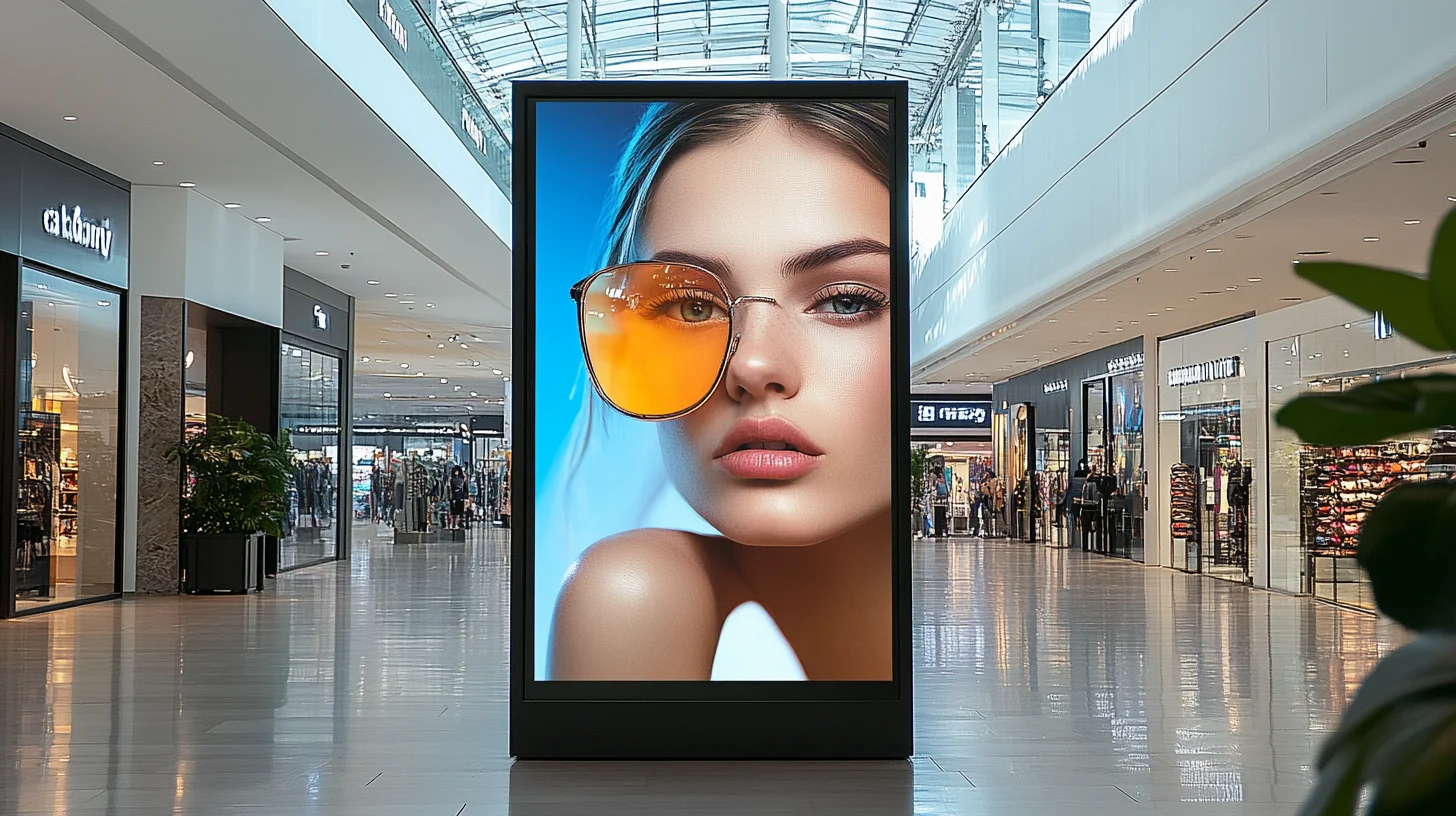
This is what almost every signage screen is. The picture is made by an LCD panel, and the light behind it comes from LEDs. Older LCD screens were lit by fluorescent tubes, and LED backlighting replaced them with brighter, slimmer, and more efficient screens, which is how the LED label took over the shelf. Marketing calls these LED screens, LED TVs, and LED displays, and none of that is wrong, but the panel technology is LCD. When a product listing says LED and the price is in TV territory, it is an LED-backlit LCD, and it is the right screen for the overwhelming majority of indoor signage.
Direct-view LED walls
Here the LEDs are the pixels. Each tile is a grid of tiny LEDs, tiles join edge to edge with no bezel, and the wall can be any size and shape. Direct-view LED is what fills stadium screens, broadcast backdrops, and the seamless lobby walls in newer buildings. Its defining specification is pixel pitch, meaning the distance between LEDs, which sets how close viewers can stand before they see dots and largely sets the price.
LED signs and message boards
The roadside marquee, the scrolling text sign, and the single-color message board are LED signs. They are purpose-built outdoor products with their own controllers, usually low resolution and often single or limited color, and they are a different category from screens that show images and video. Our what is signage page places them in the wider signage landscape, and our church signage page addresses the roadside sign question for that setting.
Once you know which of the three a page or a quote is talking about, the rest of the decision gets much easier.
LCD versus LED for signage
The comparison most people mean is between an ordinary LED-backlit LCD screen and a direct-view LED wall, so that is the comparison worth making.
Size and seamlessness. LCD screens top out at sizes you can buy as one panel, and tiling them leaves visible bezels. Direct-view LED scales to any size with no seams, which is why it wins for very large surfaces.
Viewing distance. LCD looks sharp up close. Direct-view LED at typical pitches needs a few feet of distance before the pixels blend, with finer pitches closing that gap at higher cost.
Brightness. Direct-view LED is far brighter, which matters in daylight-flooded atriums and outdoors. Indoor LCD is bright enough for normal spaces and high-brightness LCD covers windows.
Cost. LCD costs a modest amount per inch. Direct-view LED costs a multiple, and fine pixel pitches multiply it again. For a screen-sized surface indoors, LCD wins on price by a wide margin.
Maintenance and lifespan. Both run for years in commercial use. LED walls are serviced by swapping tiles, and LCD screens are replaced as units.
The practical rule follows from all of this. Under roughly a hundred inches indoors, an LED-backlit LCD is almost always the right answer. Above that, or wherever seamlessness and extreme brightness are the point, direct-view LED earns its price. Our displays guide covers the LCD buying decision in detail, including brightness levels, orientation, and commercial versus consumer screens.
Where each type fits
Matching the type to the space is most of the decision, and the patterns are consistent.
Standard indoor spaces such as lobbies, corridors, retail interiors, cafes, and offices use LED-backlit LCD screens, singly or in small groups.
Large-scale indoor surfaces such as atrium walls, auditorium backdrops, venue concourses, and architectural features use direct-view LED walls, where seamlessness is the point.
Daylight and outdoor placements need high-brightness hardware, and the specific choices are covered on our outdoor digital signage page.
Roadside and long-distance messaging is LED sign territory, where a low-resolution, high-brightness message board beats a screen that nobody can read from a moving car.
When a space seems to want a giant screen, it is worth asking whether several ordinary screens showing coordinated content would serve the audience better for a fraction of the cost. Often they would.
Video walls, LED and LCD
A video wall is any arrangement of multiple screens or tiles working as one surface, and the how-to questions about them are really questions about which of two approaches you want.
A seamless single image
For one picture spread across the whole surface, you need either a direct-view LED wall, which is seamless by nature, or a set of thin-bezel LCD panels driven by a video wall controller that splits one signal across them. This is professional installation territory, with the controller, mounting, and calibration as significant as the screens.
How to make a video wall with TVs
The homemade version people search for is four or more TVs arranged in a grid. It works, with honest limits. Consumer TV bezels leave visible gaps in any single image, and spreading one picture across the set needs a splitter or controller that supports it. The approach that works reliably is treating each screen as its own display showing coordinated content, such as four screens with four related messages or one message per screen in a sequence, rather than one image cut into quarters.
That second approach is exactly how Screenly runs multi-screen installations, with one Screenly Player per screen and all of them scheduled together from one dashboard. It is not a seamless single image, and it is not meant to be. It is a set of screens that behave as a group, and for most lobbies and retail spaces that is the more useful thing.
Choose the seamless route when the surface is the spectacle, and the coordinated-screens route when the content is.
What LED signage costs
The three LED categories sit in three different price bands, and knowing which band you are in prevents most sticker shock.
LED-backlit LCD screens are priced like TVs and commercial displays, from a few hundred dollars for consumer sizes to more for commercial-grade and high-brightness panels. This is the affordable band and the one most signage lives in.
Direct-view LED walls are priced per area and by pixel pitch, and they cost a multiple of LCD for the same surface, with installation, controllers, and structural mounting adding substantially. This is a capital project, not a purchase.
LED signs are their own market, with pricing driven by size, resolution, and outdoor rating, and often involving permits and electrical work.
Whichever category you are in, the player and software layer costs the same. A Screenly Player ($219) or Screenly Player Max Mk3 ($699) drives each screen or feed, and the subscription is per screen on the pricing page. Our full cost breakdown puts these bands in the context of a whole deployment.
Running content on LED screens
The good news about all of this is that the content side does not care which LED product you chose, as long as it has a video input.
LED-backlit LCD screens connect to a player over HDMI like any screen. Direct-view LED walls take their signal through a controller that accepts HDMI, so a player feeds the controller and the wall shows the content. LED signs generally use their own controllers and content formats and are not driven by signage players, which is one more reason to treat them as a separate category.
For any screen or wall with an HDMI path, a Screenly Player provides scheduling, playlists, apps, and monitoring, and content is cached on the device so playback continues through network drops. Very large or dense content renders best on the Player Max Mk3.
Getting started
Most LED decisions resolve in a few steps before any hardware is ordered. The path looks like this.
- Identify which of the three LED products the space actually needs, using the definitions above.
- Default to LED-backlit LCD for indoor surfaces under about a hundred inches, and consider coordinated multiple screens before a single giant one.
- Reserve direct-view LED for large seamless surfaces and daylight-flooded spaces, and plan it as a project.
- Start a trial and connect a Screenly Player to the screen, or to the wall’s controller.
- Publish and schedule from the dashboard, with every screen managed together.
From there the LED question is settled, and the content does the work.
Frequently asked questions
What is LED digital signage?
It depends who is asking. It most often means an ordinary LED-backlit LCD signage screen, sometimes means a direct-view LED wall where the LEDs are the pixels, and sometimes means a roadside LED sign. The three are different products at very different prices.
Is LED or LCD better for digital signage?
For indoor surfaces under about a hundred inches, an LED-backlit LCD screen is better on price and sharpness. For very large or seamless surfaces and for extreme brightness, direct-view LED is the right tool. Most signage is LCD for good reasons.
What are the advantages of LED displays for digital signage?
Direct-view LED offers seamless scaling to any size, very high brightness, and long service life with tile-level repairs. LED-backlit LCD offers low cost, sharp close-range viewing, and easy availability. Which set of advantages matters depends on the space.
Can I make a video wall with TVs?
Yes, with limits. Bezels will show in any single image and you need a controller to split one signal. The reliable approach is to run each TV as its own screen showing coordinated content, which is how Screenly handles multi-screen installations.
Does Screenly work with LED walls?
Yes, wherever the wall’s controller accepts an HDMI input, which is standard. A Screenly Player feeds the controller and the wall shows the scheduled content.
Is an LED sign the same as digital signage?
No. LED signs are low-resolution message boards with their own controllers, built for roadside and long-distance messaging. Digital signage means screens showing images, video, and live content managed by software, and Screenly runs that category rather than LED signs.
Three products, one decision
Know which LED product the space needs, default to the ordinary screen unless the surface demands more, and let the content layer do the rest. Whichever you choose, Screenly runs it from the same dashboard as every other screen.